Blog Posts

Unsung “life” heroes stepped up their game-image

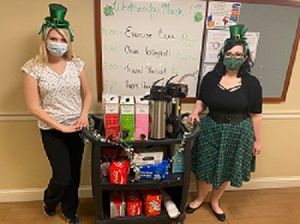
This past year has been a challenge for so many of us due to lockdowns, shortages, health struggles and much loss for so many. Here at FOURMIDABLE, we couldn’t have gotten through this pandemic without our dedicated “life” heroes: those onsite Managers, Activity Directors, and hard-working Service Coordinators. These women and men have tirelessly devoted themselves to their senior communities, setting an outstanding example of what dedicated professionals look like. What do they do? The simple answer is everything – everything to help their older residents. So many of our communities were locked down and forced to isolate their residents, leaving them unable to embrace or even see their families. And hosting events or activities proved nearly impossible. But without fail, our staff turned up the effort, finding unique and fun ways to fill the lives of residents with something other than worry or concern over a virus. They had to reconfigure policies and deal with unique challenges, even as they faced the same health concerns we all did. Activities Directors typically plan lots of activities and events in communities with older residents, celebrating holidays or special occasions, hosting bingo or game nights, taking people on outings and giving residents something fun and entertaining to experience. Service Coordinators, at HUD communities, typically work with the elderly and persons with disabilities and play a critical role to support a platform for financial and physical security, social connections and the delivery of supportive services. With the pandemic, these Coordinators had to reach out to multiple services to fill in those gaps that they would never of thought they would have had to do. How things changed The biggest change was finding ways to keep families connected. This has been the era of remote visits through Zoom, of pulling together window visits and doing everything to keep isolated seniors active mentally and physically. Let me tell, they did a great job providing emotional support when personal contact was out of the question. Being creative requires much thought, but also lots of work. They rolled up their sleeves and kept at it for month after month, always willing to serve and help. While field trips and outdoor activities were limited, creative ways to offer forms of physical activity, like in-chair exercise classes or hallway kickball were the order of the day. Creativity also led to in-person performances with musicians or singers outside serenading the residents who watched from windows or balconies. Families, and local service groups or charities, helped for sure, hosting automobile “parades” for special occasions, or even just to break up the day. Another great idea was to get outside volunteers to send residents simple greeting cards. In one community where “happy hour” was halted, the staff implemented a “Happy Hour Cart” where they took a cart loaded with various beverages to the residents’ door. Finding other ways to help Even as we look back at the many ways our Activity Directors and Service Coordinators were able to continue playing a vital role in their communities, I am reminded that there are plenty of cool ways these individuals help. Staff work with third-party providers and vendors to deliver elements that can’t be produced in-house, create and share goodie bags or bring in performers to provide some joy during lonely times. They also help residents apply for different programs, stay up-to-date on what’s going on in the community and even teach them how to use things like Zoom or Facetime. Just as important as what they do for a resident’s mental health, staff heroes also assist in ensuring everyone has access to PPE, medicine, food and household supplies, working as well with the medical community for testing and possible vaccinations. In the end, the value of team on the front lines, cannot be understated. When family was cut off from family, when communities were locked down or isolated, these individuals stepped up and became family and friends to residents. And heroes to us. My thanks to each and every one of you.    

Read more

Springtime means focus on cleanup, landscaping and maintenance-image

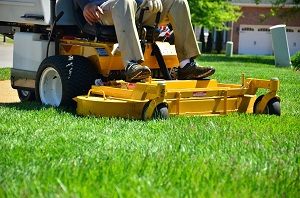
Besides being a time for celebrating the end of winter and admiring flowers, green lawns and sunny skies, this time of year is perfect for what homeowner's call “spring cleaning.” For us at FOURMIDABLE, spring cleaning is a much broader idea focused on what our property managers and owners do to spruce up their communities, whether outside or inside, all while working through plans for routine maintenance. There’s no doubt that the pandemic has caused many things to stall or be simply put on a back burner as we focused on personal health, medical safety and a commitment to a whole other kind of cleaning. With things slowly improving across the nation, now is a perfect time to begin or complete projects that need to be taken care of around our communities. So, let’s take a look at some practical ideas for ensuring we use spring as an effective time to refocus on beautification, cleaning, upgrades and improvements. Start with the outside No matter the size and shape of your community, spring is a key time to pay attention to the grounds of your property, ramping up fertilizing, trimming, weeding, and, of course, grass-cutting. More importantly, we need to see landscaping as an integral part of our overall beautification, and the desirability of our communities. A well-groomed hedge row, the removal of dead or dying trees, the seeding bare patches of grass and the planting of flowers goes a long way to improving the look and feel of a community for all concerned. As you work outside, I’d even go so far as to suggest organizing an outdoor activity in your community – if you plan such events during the year. This could be a flower planting day or clean-up day for everyone around the community, maybe even bringing in an extra dumpster and encouraging residents to do a bit of their own interior spring cleaning. You’ll need to share the information on the date, as well as what people can expect and the resources you might make available to help them get in a cleaning mood. And social distancing may still be the norm, so any event has to be well considered. Stay focused on exterior needs So much of the look and feel of our communities begins with first impressions. Staying focused on the outside even after initial work is critical. If you need to work with rubbish companies for new or refreshed dumpsters or secure a contractor for some simple asphalt work on the roads or sidewalks, now is the time to begin that process. As more construction and renovation work increases with the shadow of COVID-19 slowly falling behind us, landing a good contractor may become a bigger challenge. So, don’t hesitate, especially if you have the budget. Other outside areas to focus on should include the trees, shrubs and the flower beds, as mentioned before. But don’t forget about your signage in and around the community, lighting and other aspects that bring the grounds to life. If these need cleaning, a new paint job, or even replacing, spring is a good time to figure that out. Clearly, some of this relates directly to your maintenance budgets and the kind of advance planning that we should all practice not only in our personal homes but in our communities, where each year’s budget should include something for annual upkeep as well as larger maintenance projects. Structures, infrastructure and getting proposals There is a fine line between simply cleaning and more intensive maintenance, especially when we’re talking buildings or structures. But it is certainly possible to clean building siding or bricks, especially if they don’t require further work. Simple things in these areas might mean bringing in streetsweepers to wash your roadways or having your maintenance team pressure wash sidewalks, sides of buildings or other areas that need attention. Yes, building repairs – new gutters or roofs, for example – also have to be front of mind during the warmer months of spring and summer as well. This goes back to your major maintenance plans and budgets. Whatever you decide, I urge you to begin gathering and reviewing proposals, whether for landscaping projects like mulching or planting flowers or trees, or for major maintenance such as cracked sidewalks or failing asphalt. Doing something inside When it comes to a focus on the interior, I’d suggest things like smoke detector replacements, checking or changing air filters, air conditioners (wall mounted ones) and furnace filters. Painting is another key way to liven up a building. Getting vacant apartments ready for spring leasing is a regular task of any good management team, so not much needs to be said further about it. Just remember with many leasing experiences still being done remotely, the look and feel of an apartment is more critical than ever in showcasing just how much a property team cares about its community and living spaces. Share the excitement There’s always a sense of excitement with the coming of spring. New flowers sprout, our lawns turn from brown to green, we can hear the birds sing again and everyone is ready to get back outside after the drab and cold of winter. So, create some buzz. Communicate with your entire community. Tell them of your plans and what you are doing in terms of cleanups. Send out e-messages, post flyers, share in your newsletter and get everyone excited about what is in the air. Remember, expectations are part of perceptions, and if your residents know what to expect, their impressions of your care and concern for them will certainly engage them, make them feel part of the community and allow you to be a good manager at a time of year when everyone feels just a little bit more relaxed – thanks to spring having sprung.

Read more
Stay Focused on Staff Training and Development-image

Have you ever heard the saying “in training there’s no winning or losing, there’s only learning?” We all know that Olympic athletes train every day, world-class musicians’ practice endlessly and doctors spend years and years learning so they can help people in need. As I see it, training – and staff development – should come naturally to any organization that wants to be successful. At FOURMIDABLE, we take this concept very seriously – knowing that everyone really does win when they learn. So, what are some of the things we’ve learned over the years? Let me start with the basics. Training, professional development and even things like mentoring programs should focus on one thing: advancing your team, their knowledge, skills and the goals for your company. Promoting learning promotes your team to be its best and encourages members to keep up with what’s happening in your industry. It’s also a key aspect of practicing employee engagement at a high level where staff understand your commitment to them and their success. We focus on several training approaches at FOURMIDABLE, but these are just examples and not necessarily the full extent of our training at the corporate or the community level. Online training approaches For our team, online training begins with Fair Housing within 90 days of a new hire’s start. The program is centered around the services of Grace Hill, which provides curriculum for fair housing, compliance, leasing, maintenance and management. Staff members are required to complete modules within a certain time. These modules are purposefully designed by Grace Hill to be shorter, more engaging and specific to the property management industry. Most can be completed in two hours or less and offer ways to retain what’s learned. Grace Hill prides itself on what they call “talent performance solutions” that encompass policies, training and assessments. And they offer many years of multifamily experience, in-depth expertise and excellent customer support. That’s just one great example of an online approach. There are many organizations out there that can help, but it’s important to find ones that focus on what you do and who are willing to work with you to create the best return on your investment. Licensing and continuing education For me personally, ongoing learning through continuing education is fundamental to retaining a great team of employees. That’s why, at FOURMIDABLE, we support many levels of industry training and gaining certifications is strongly supported by our management team. Supporting things like real estate licensing, housing certifications and maintenance training makes perfect sense. The investment in time and cost is well worth the return that comes from your team’s growing abilities, improved confidence and up-to-date knowledge of what is going on around the country, whether it’s in terms of compliance, legal changes, new government rules or the changing nature of documentation and technology. What about in-house efforts? Absolutely utilize the skills and knowledge of your own staff to develop ways internally to share knowledge and train one another. As your staff builds its knowledge through outside training, the opportunity to take that information to the rest of the organization can be a huge benefit to the entire team. One example at FOURMIDABLE is the property management software training we do ourselves through the skills and knowledge of Michelle Joustra, our Residential Operations Specialist.   Michelle has been a vital member of FOURMIDABLE’s Entrata team and has countless hours of training, implementation, and creating best practices for our staff. Being able to work internally keeps the team connected, makes logistics for training a little easier and offers opportunities for staff to show what they can do to help around the organization.   Mentoring and more While mentoring itself is not often considered an aspect of training, I believe it can be a critical factor in promoting staff and developing new leaders from your younger or less experienced employees. Think of mentoring as akin to “life training,” where more experienced leaders share their knowledge, make lessons from their successes – and struggles – and help guide younger members. This helps build their confidence, their abilities to problem solve and be innovative, and reach new potential that alone might be more difficult. Lastly, showcasing ideas through a blog shared with team members, community partners and leaders, and a broader property management world, is kind of like offering an abbreviated training course in and of itself. So, stay focused on training, professional education and development, and recognize the value of sharing information internally and with others outside of your organization. It will benefit you in the long run.                

Read more
Building a good team – from bottom to top-image

Lately there has been a renewed focus on improving staff development and success, especially from entrepreneurial leaders seeking to develop and maintain a great team for their organization. Many suggest a good team can be created from top to bottom, but I also like to think about it the other way – we should be building our team from bottom to top, involving all of our frontline workers first and foremost, along with managers in a thoughtful process that achieves ongoing engagement and success. For us at FOURMIDABLE, this means everyone plays a key role, from housekeepers and groundskeepers to accountants and HR assistants, and from community managers to corporate officers. An author I recently read in Entrepreneur magazine suggested that there are six steps to building a good and effective team. As a CEO, Cynthia Johnson reflected in her piece on what she saw as the right path forward, adaptable for any organization, large or small. The steps needed for a great team Johnson’s process for building a strong team, one that is not only good but can be great, includes a series of simple, and ongoing steps. They are: focus on roles, value each role, communicate, set goals, celebrate successes and failures, and know each other. Here’s my perspective on each of these ideas. First, there are likely many different roles, at many different levels. These need to be clearly articulated and defined. Every employee involved, from maintenance technician to President, needs to truly understand their role and how they work both together and on their own. Second, it is critical to value everyone in your organization, no matter the scale of their responsibility or length of their tenure. This value comes with recognition, understanding and a commitment to develop each person in their role. Next, as a leader, communication is a top priority. In our case, it means communicating to all members of our teams spread around the country, as well as letting our residents and community leaders know what is going on. Always set goals, not only for yourself and the organization, but for each member of team. Think about it: giving goals to staff at the bottom as well as top of the organization shows how much you value them. Goals are not just yard sticks, they are a form of responsibility and leadership. Everyone wants to celebrate success. While that is important, it is also important to discuss failures. Now, that doesn’t mean focusing solely on who’s to blame. This process is more about learning, adapting, resolving and improving for the future. Lastly, know yourself. I love this step especially. At FOURMIDABLE, we have recently had some staffing changes at the corporate level. This has provided us a real opportunity to consider the things I just wrote about and to look at ourselves. We are constantly evaluating our needs, the roles of the team and what they bring to the organization, focused on success and sometimes on failure. For me personally, some recent comments by one of our janitorial team at Rosehaven Manor sums up a sound attitude and approach to building a great team. Her words say it best: “Working for FOURMIDABLE has been great. Very respectful and happy people, who will encourage you and support your hard work.” Encourage and support hard work. Those words and actions reflect the kind of team you want and need.

Read more
Managing contactless work orders-image

Handling the ongoing challenges of COVID-19 in our communities is requiring innovative thinking, advanced planning, flexible procedures and, of course, the ever-diligent efforts of our hard-working staff and managers.   One area to look at more closely, and one I find especially important, is the idea of managing contactless work orders. Complying with executive orders from state governors can prove difficult, but not impossible, as long as you are willing to develop a system that includes the concepts outlined: being innovative and flexible, planning and involving your teams in developing solutions.   So how does this idea of contactless work orders actually work?   There are several key aspects to review. Hopefully with a robust property website, your residents should be able to submit work orders already using their resident portals. The old-fashioned method of taking work orders over the phone certainly comes into play here as well since face-to-face contact is what we are trying to avoid.   Depending on restrictions, it may only be possible for your team to manage “emergency” work during certain times. Therefore, you need to develop a thorough log system to record and prioritize, leaving less urgent work orders for when it becomes safer to handle them in person.   If staff are going to enter a resident’s home, it is important to get authorization to do so when the resident is not at home. If that is not possible, the best idea is to schedule an appointment when the maintenance team can be safety protected through appropriate equipment and the resident is in a separate location from where the work is being performed. When the team member enters a unit, it is critical they are well protected and avoid or limit contact with the resident.   Keep in mind that vendors like plumbers or exterminators may need to also continue serving your communities, and it is important to discover and understand the protocols they are using for keeping both your residents and their own staff safe.   If pets are involved, advise the staff completing the order in advance, and if the resident is not home, they need to ensure that the pet is behind closed doors in a location separate from the requested work order.   As the year unfolds, there will continue to be plenty of issues to solve. For example, managing the completion of the backlog of work orders that had to be delayed. At the same time, this is a perfect time to develop the procedures, protocols and systems to help make your communities successful with things like contactless work orders, rent payments, applications, lease and renewal signings through online portals and drop boxes.   If you are looking for further insight, our professional office team is available by phone, email, appointment, or virtually only at this time.

Read more
How to Achieve a Successful Community Grand Opening  Even During an Ongoing Pandemic-image

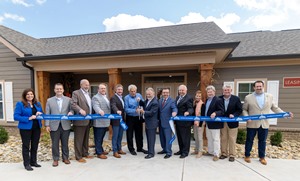
One of the truly special events at any housing community is the hosting of a “grand opening” or sometimes even a “grand reopening.” As a team committed to developing great housing communities across the country, we often play a role in helping to plan and hold these "grand openings" for our projects. Now more than ever it is critical to understand what it takes to successfully pull off a grand opening event, including any current rules in place for social distancing during the ongoing health pandemic. Options for special events can be more limited these days but they are still highly doable. Even with the challenges of hosting special events during this time, there are a number of essential elements that are always present when considering how best to create a fun and successful grand opening. Timing The first is timing, which begins with the assumption that early is better. At FOURMIDABLE, timing means a project schedule starting with a prominent construction sign, and includes details such as a contact name, website, and the contact phone number. We also create online guest cards using our property management software to communicate with our prospective applicants. At 120 days prior to receiving the Certificate of Occupancy, we will have prospects begin the application process and pre-qualify applicants based on income guidelines, program requirements and screening. Leases will be ready to be signed upon the receipt of the Certificate of Occupancy. The grand opening event will usually take place 60 days later. Planning and scope A goal without a plan is just a wish. The second essential element is planning the various details and connections that will make the grand opening a success. With the ongoing pandemic, hosting an outdoor event is a great way to maintain social distancing and help ease any concerns over potential health issues. The size of the event may have to be smaller, but a fun, impactful opening is still very possible no matter the size of the audience or participants. One way to do that is to organize the event around a theme. Finalizing a budget should also be established early. In our case, other details include coordinating the date, time, and attendees with the local chamber of commerce for the ribbon cutting ceremony as well as any other prominent local leaders who may need to be invited. We also contact local businesses for rental of a tent, table, chairs, and securing appropriate floral displays or refreshments. Knowing the theme helps to branding the event with the community identity. You can then order any gifts or decorations and brand them with the logo of the property and, of course, send out themed-invitations. Communication The third essential element is communication, and it's here that "over communication" is better than overlooking something. Speak with the local chamber of commerce and housing authority and invite them to help with the grand opening plans and the various steps needed to have the event be a success. You could also consider informing the local newspapers, especially those in small towns, using a press release announcing the opening. Outreach The final essential element is outreach. This includes the "tell everyone" platforms available to you, including your website and social media platforms like Facebook, Google and LinkedIn. Be sure to send out invitations to neighbors and residents, local elected officials, and the police chief and fire marshal. Invite the business community through the chamber and consider advertisements in local newspapers and radio stations in the area. Seek opportunities for promotion on local radio and television community events programs. Plan and schedule any local advertising and confirmation of the event a week prior to it taking place. Organizing a successful grand opening for a rental property is one of the most significant and potentially satisfying stages in a new community getting off on the right foot. As we have seen over this year, figuring out meaningful and safe social events can be difficult, but with some energy and commitment it is possible to execute a successful grand opening. With attention to detail and a resolve to follow some essential steps, your next grand opening will be the success you have been striving toward.

Read more